Tuesday, April 12, 2011

A day on the beach

The first visit to Playa Flamenco was around 8 pm, the week before that extra big moon that everyone all over the globe was talking about. The moon was not full yet but it was shining strong from a clear night sky and making the sand almost glow. The big dipper was almost upside down. Me and my six year old ran into the water and up again, in and up, getting caught by the waves, laughing in the moon light. To see his immense excitement made me the same.

The next morning we returned armed with buggy boards, sandwiches, cameras and swimsuits, no less excited. We found a semi shaded spot close to the vegetation above the sand. From inside the bushes we were watched:

This couple (not yet identified) were skilled in snatching food from bags and trash cans and were almost invisible in the stark contrasting shades. I stood right in front of him a long time wondering where he went, until I realized that he was sitting right in front of me and had seen me all the time.

I also saw these great red beetles.

it must have been midst of mating season because we only saw couples like this, attached and still walking around in the sand.

In the trees I saw enormous nests of some kind.

But I soon turned my eyes to the ocean and watched in awe these great fishermen:

 Brown Pelicans!


One came first, soon to be joined by three more. Other bird species came and went, following the example of the pelicans, seemingly a good opportunity for fishing. The pelicans went searching and diving numerous times:
 And rested on the waves in between.

We also took a few drives over the island.

The landscape is different from the lush humid greenery of the main island. Here on Culebra it's almost desert climate. The ocean wind keeps trees from growing tall. Narrow winding roads cross the island and you never know what will reveal itself when you turn a corner.


Culebra

To the East of the main island of Puerto Rico lies the island of Culebra. It's small and charming with a bit of an attitude. I am not sure if it's an official policy, but there are no high rise hotels or shopping malls on Culebra, and the life style seems decidedly slower. This was the third I time I was there, last time was eight years ago, but little had changed. There were more tourists from the states than I remembered, but I absolutely felt the island was big enough for all of us. I even encountered a couple from my own birth town Stockholm.


Culebra is famous for its beaches, and they really seem to be setting the standard to which every other beach is measured. White soft even sand, that strong turquoise color of the crystal clear water, palm trees gracefully leaning in to give shade. At night, the waves come crushing strong but gentle, never ending. it's consoling to be in their presence and a bit humbling.

 We were lucky to be borrowing a house from an old friend of my husband who owns a property in "downtown" Culebra.

It was a lovely house, playfully decorated and with a nice view of the bay. 

But to me the biggest asset of the house was this:
A hummingbird nest, attached to a hook for a hammock in the ceiling!

I soon saw the little hummer fly back and forth, and eventually I could spot the inhabitants: two tiny beaks and a few feathers occasionally stretched outside. The nest appeared to be made by pieces of leaves, and I read that hummingbirds, at least the Puerto Rican ones, use spider web to thread it together - the silk expands when the chicks grow larger and heavier.

Here's mama hummingbird busy feeding the babies:

 Here you can see the nest on the ceiling hook on the beam.

I was so close to her but the best I could do was this!

She was very aware of me, sometimes buzzing up within a foot of my face to see who I was and what kind of threat I was posing. I was standing very still, and I made sure to leave them plenty of time undisturbed. But I was truly mesmerized and could easily have spent the whole vacation just staring at that nest.

Here she is resting in the tree nearby.

Another picture of her baby.

Further research suggested that she could be a Green Mango, a Greenbreasted Mango or a Green Emerald hummer. The mango species are indigenous to Puerto Rico and very common. I saw a few more back on the main island.

I read that hummingbird nests and chicks are relatively safe from predators, perhaps since the little birds are known to be fierce and fearlessly attacks each other or anyone else coming too close. But I did notice another bird that was flying up to the nest when the mother was out foraging. The other bird did not try to harm the chicks, but was trying to steal some of the nesting material. I got quite upset and worried that the nest would fall apart, and I scared the yellow guy away. I saw this happen two times, and felt as helpless as I possibly could.
But the nest remained in good shape during our four days on the island, and I do have a good feeling about them. Hummingbird chicks spend no more than three weeks in the nest, and judging from the size of them they are hopefully out and about by now, their beaks have grown to full length, and they are no longer depending on their mother.
In fact, their mother will have no recollection of them being her offspring and from now on she will see them only as competitors for food and territory, and she will fight them as she will fight anyone else who tries to feed from "her" flowers.

The yellow bird that was stealing from the nest I tentatively identified as an Adelaide's warbler, bright yellow with white and black, and common on the Puerto Rican islands.

The hummingbirds were not the only animals around our house.
 The mourning doves look like they do in Boston and sounded the same too.


Lizards we certainly do not have in Boston. Here they are everywhere, mostly no more than four inches from head to tail tip, in many combinations of colors and stripes.

These caterpillars were crawling all over this plant. Admittedly it was a bit yucky with so many of them, but I was really curious as to what they would eventually turn into. No answer on that yet!

Thursday, April 7, 2011

Gardening!

It's time.

I've finally measured my community garden plot - it is 9 by 14 ft. That's not a lot, but I have been able to squeeze in tons of stuff - some years over 40 different kind of plants. This year will be no exception.

Some things are ahead of me:


And some things were started in the previous year, like these garlics.

I sprouted peas at home and brought them to be planted:
Garden peas for shelling and eating and Sweet peas for the fragrance and color they bring.

I had plans for a cylindrical container for my raspberries - 

Two half trash cans will do the trick, so that I don't have to ruin the rest of the plot digging up the root suckers all the time. A couple of Alpine strawberry plants can go in on top.

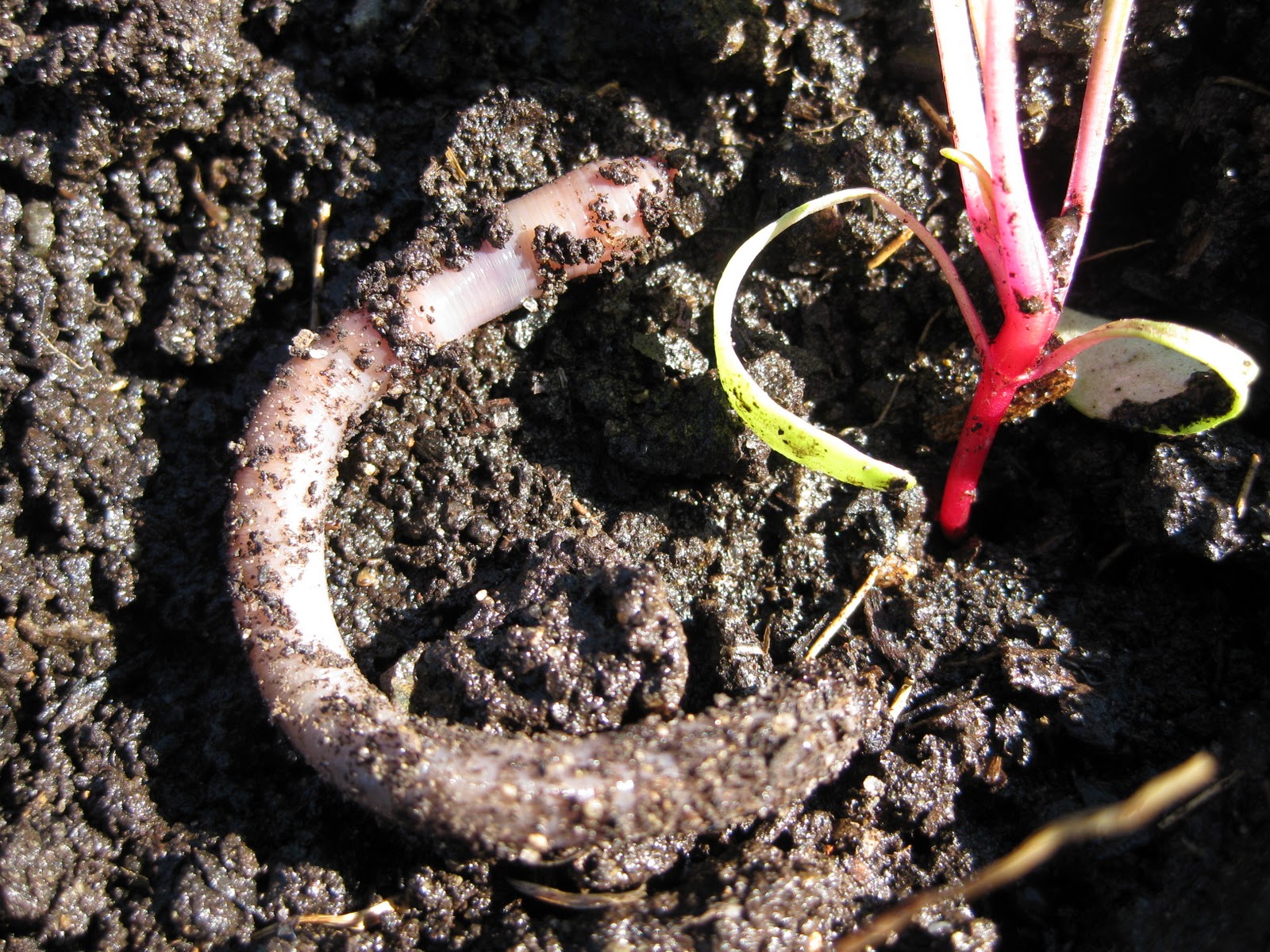
I had grown some Swiss chard in my window:

Now it will get into the ground. If the size of worms matter at all, this will be a great year!


It had been some gray and rainy days. Rain's a lot better than snow though. If you don't know Boston - that tall building is the Pru - helping everyone get a sense of direction wherever you are.

But spring is slowly advancing. Baby lupines are peaking out.

And this interesting moth rested on the porch railing. Note that left and right wings have different patterns!


Friday, April 1, 2011

En el Yunque

On the north-eastern corner of Puerto Rico lies El Yunque, a national park and rain forest. Exactly what constitutes a rain forest I'm not completely sure about. But there is something about mountain ranges trapping rain clouds from the sea and capturing moisture enough to make it rain several times a day. Mostly short, heavy rain falls that last 5 minutes or less.

The visitor's Center is great and if you ever go to Puerto Rico, you should definitively save a day for El Yunque. It has many hiking trails ranging from paved paths to steep mountain ravines, several outlook places where you can see all the way down to the turquoise ocean, and lots of crystal clear streams cascading down the mountains. It's home to the endangered Puerto Rican parrot and many other species of flora and fauna.
The density of vegetation is immense and I really got the impression of a self-contained eco system while there. Every surface area is covered with growth and even though I actually saw very few birds I heard them all the time. I did see a hummingbird, but never had a chance to take a picture.

I'm not really into orchids, but they are plentiful in Puerto Rico and I like what they had done on the columns of the visitor's Center:


Right outside I saw the Breadfruit tree again:

It really is a good looking tree, even if I haven't heard of anyone eating it, I will have to try it next time. It was a staple for the native population.

Outside the Center I saw this flower - its' name eludes me now - but it has an exclusive relationship with one of the Puerto Rican hummingbird species, who's long bill is the pollinator for this plant species.


They also had plenty of the stunning red ginger.

By the waterfall these "tree ferns" were growing.


After getting our maps we drove up the mountain to look for a suitable hiking trail, preferably next to a waterfall.


The rock was in the sun, but on the other side of the trail was this deep darkness that probably gets very little sunlight.


We thought we had found a good trail, but it proved very steep and difficult and our littlest explorer soon got very tired and fed up with the whole project. After reaching some kind of summit - you can't really see because it's so dense everywhere - we climbed back to the waterfall again. We waited patiently under a rock outcrop for a short rainfall to pass and then we bathed our feet in the cold water and had our snacks.
Soon the sun came back:

I didn't think this looked like a fern at all.

But it was!

Another fernleaf unfolded itself beautifully red.

Every area is covered in growth:


and I was fascinated by the contrast of light and dark.


Our shade loving garden Impatience grew along the roadsides:


Eventually a longer rain shower made us pack up and get in the car, and you could see the clouds rolling down the slopes.

But on the way out of the park we stopped at a scenic view point, overlooking
the coast and the ocean.

El Yunque is truly beautiful even if it's not as rich as some of the Central American rain forests.

Next I will tell about my hummingbird friends on the Island of Culebra.